
scrum
My Take as a 20-Year PM: Scrum is Losing Its Grip
Scrum isn’t dead, but its "one-size-fits-all" dominance is over. Teams aren't abandoning agility; they're abandoning the parts of Scrum that feel like pointless process.
Why Teams Are Tired of It
- Sold as a Magic Fix: It was supposed to solve everything, but reality (legacy systems, hard deadlines) got in the way.
- Ceremony Over Substance: Too much focus on rules, roles, and meetings, not enough on "Did we ship something useful?"
- Forced Timeboxes: Sprints are used everywhere, even for work like ops or maintenance that needs a continuous flow.
- Doesn't Fit Real Product Work: Actual discovery is messy and doesn't fit into neat, two-week boxes.

The Biggest Pain Points
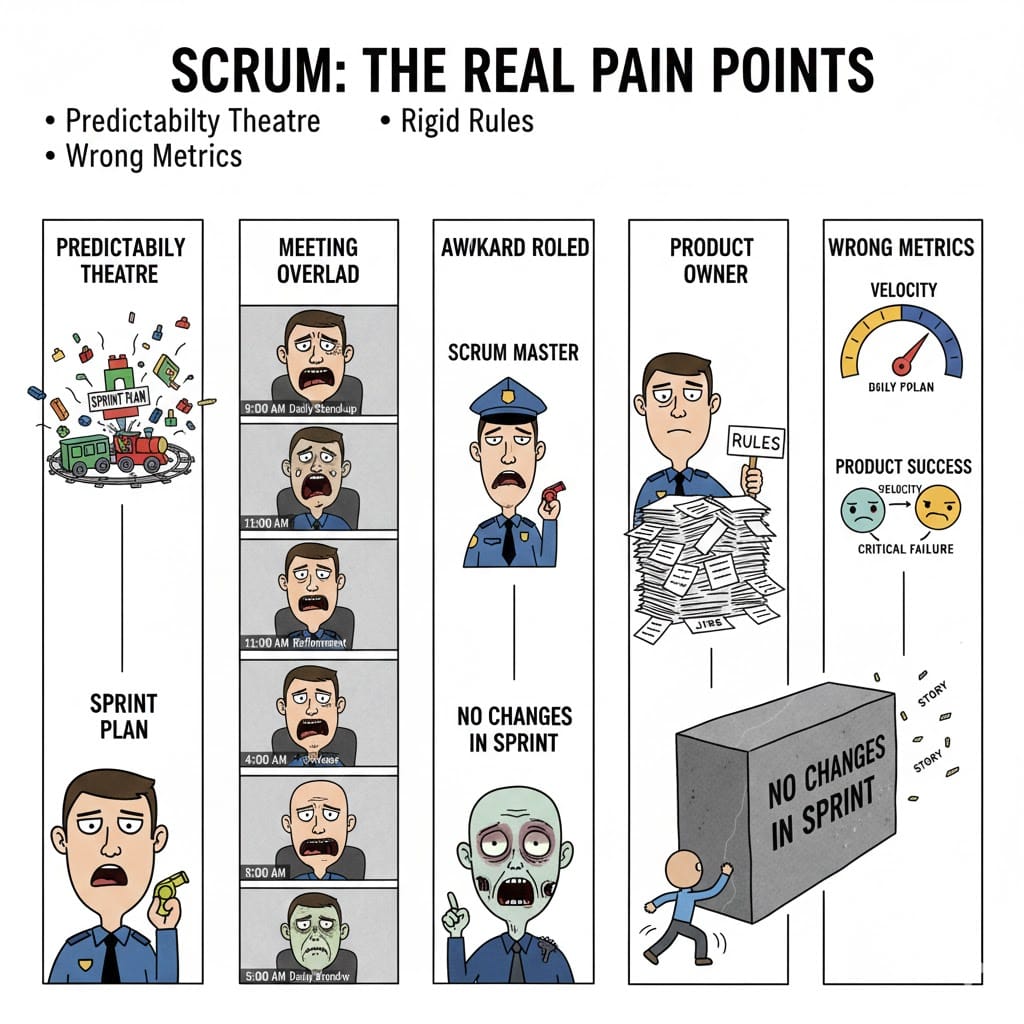
- Planning Theatre: Big planning meetings and commitments are thrown away when priorities inevitably change mid-sprint.
- Meeting Fatigue: The endless cycle of daily, planning, refinement, review, and retro is a tax on deep work.
- Dysfunctional Roles: Scrum Masters become "Agile Cops," and Product Owners are reduced to ticket-pushers with no real ownership.
- Rigid Rules in a Messy World: "No changes mid-sprint," story point obsession, and strict roles are ignored by reality.
- Useless Metrics: Velocity and burndown charts look good for managers but say nothing about actual product value.

What's Working Instead
Teams are getting pragmatic and building their own approach. They're mixing:
- A bit of Scrum: For structured feature work.
- A bit of Kanban: For continuous flow (ops, support).
- Classic Project Management: When dates and budgets are fixed.
- Strong Product Thinking: A real focus on outcomes, discovery, and data.
The Bottom Line
Scrum is becoming what it should have been all along: just one tool in the toolbox, not the entire religion.