
The Great European Odyssey: Waves of Homo Sapiens Migration
The peopling of Europe by Homo sapiens was not a single, dramatic event, but rather a complex series of migrations, adaptations, and interactions with the continent's previous inhabitants, the Neandertals. This journey spanned tens of thousands of years, shaping the genetic and cultural landscape of modern Europe.

Long before permanent settlement, small groups of Homo sapiens ventured into Europe, but their presence was short-lived. These early attempts represent the initial exploratory phase, often ending with their displacement or absorption by the more established Neandertal populations.
- Characteristics: These were likely small, pioneering groups, perhaps following game or exploring new territories. Their presence was sporadic and did not lead to continuous occupation.
- Archaeological Findings:
- Apidima Cave, Greece (c. 210,000 years ago): A skull fragment (Apidima 1) shows Homo sapiens features, making it the oldest known Homo sapiens fossil outside Africa and the Middle East. However, this presence was temporary, followed by Neandertal occupation.
- Grotte Mandrin, France (c. 54,000 years ago): Stone tools associated with Homo sapiens were found, indicating a brief occupation of the Rhône Valley, preceding and succeeding Neandertal layers.
- Achievements & Culture: Limited evidence of distinct cultural practices due to their transient nature. Their primary achievement was simply reaching the continent, demonstrating early dispersal capabilities.
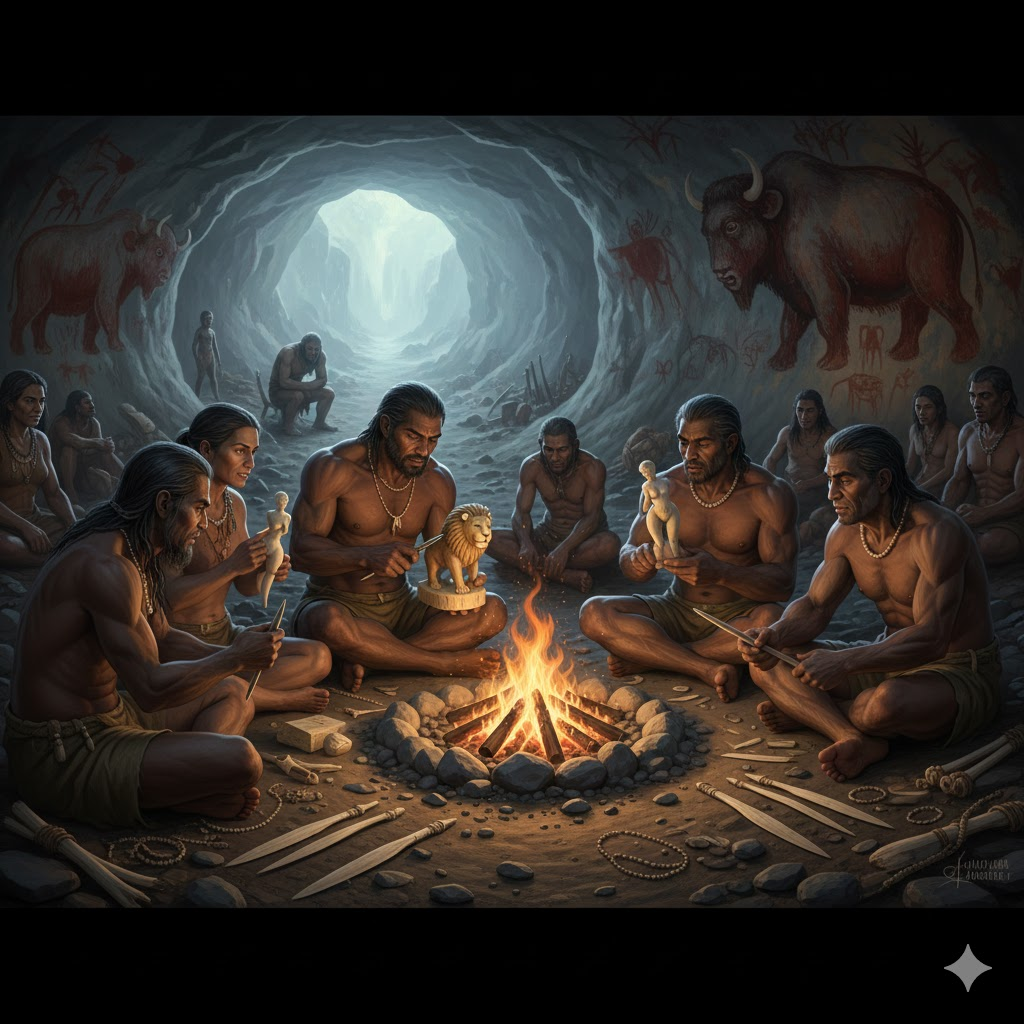
This period marks the definitive and continuous settlement of Homo sapiens in Europe. Migrating likely through the Danubian corridor and along the Mediterranean coast, these groups established a lasting presence and brought with them a sophisticated toolkit and artistic expression.
- Characteristics: These were well-adapted hunter-gatherers, capable of thriving in diverse European environments. They co-existed with Neandertals for several millennia, leading to cultural and genetic exchange (evidenced by the 1-2% Neandertal DNA in modern non-African populations).
- Archaeological Findings:
- Bacho Kiro Cave, Bulgaria (c. 45,000 years ago): Contains some of the earliest definitive Homo sapiens remains and associated tools in Europe.
- Grotta del Cavallo, Italy: Early Homo sapiens teeth and associated Aurignacian tools.
- Numerous sites across Europe: Evidence of advanced bone and antler tools, personal ornaments, and the emergence of figurative art.
- Achievements & Culture: The Aurignacian Culture. This period is characterized by:
- Blade technology: Production of long, thin stone blades.
- Bone and antler tools: Extensive use of organic materials for points, awls, and ornaments.
- Personal adornment: Beads, pendants, and perforated animal teeth.
- Figurative art: The world's oldest figurative art, such as the "Lion-Man" ivory carving from Hohlenstein-Stadel and the "Venus of Hohle Fels," dating back over 40,000 years.
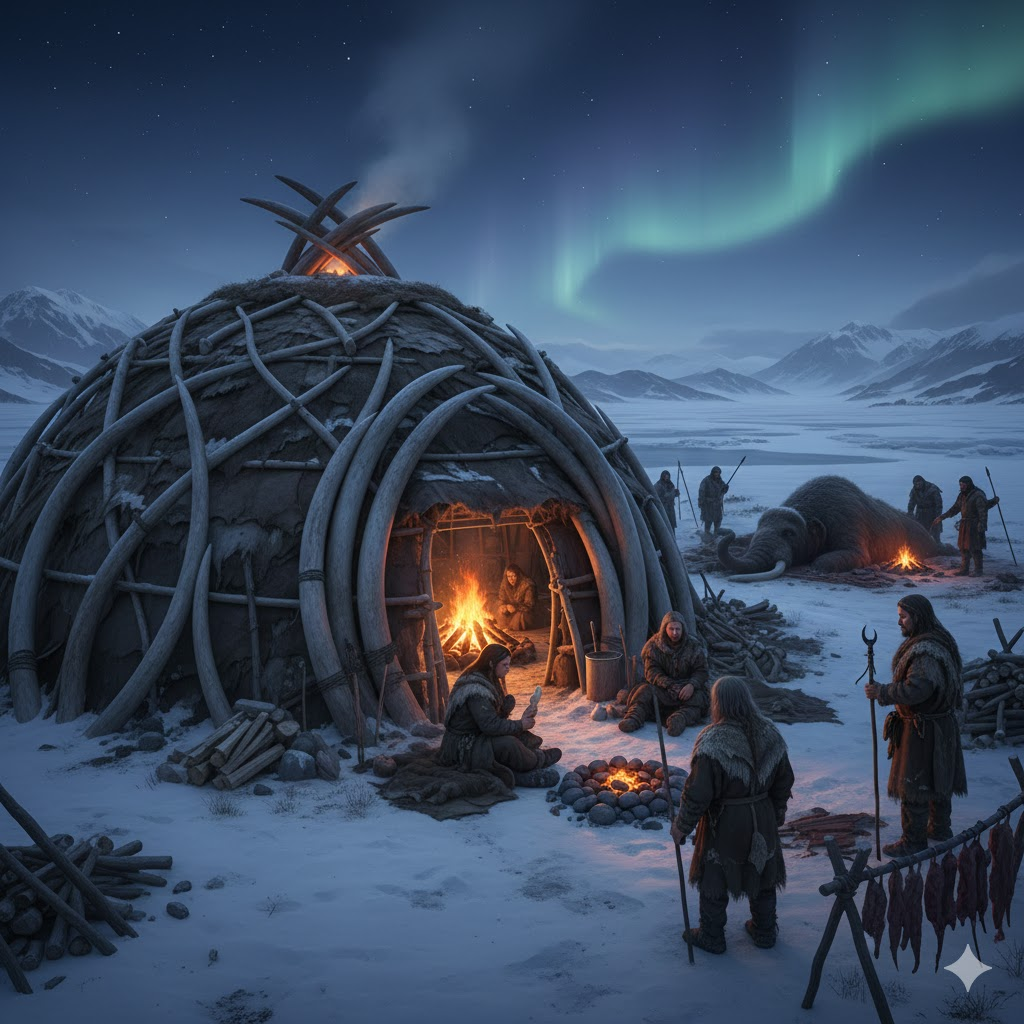
This wave saw Homo sapiens thrive and adapt to the increasingly harsh conditions leading up to the Last Glacial Maximum (LGM). Gravettian people were highly specialized hunters, capable of exploiting large game herds and building semi-permanent settlements.
- Characteristics: Highly mobile yet capable of establishing substantial base camps. They were expert big-game hunters, particularly of mammoths and reindeer.
- Archaeological Findings:
- Dolní Věstonice, Czech Republic: Famous for its mammoth bone dwellings, intricate burials, and numerous "Venus figurines."
- Grotte Cosquer, France: Submerged cave art showing seals, auks, and horses, reflecting coastal hunting.
- Achievements & Culture: The Gravettian Culture. Key developments include:
- Sophisticated hunting: Development of throwing spears, spear-throwers, and possibly nets.
- Elaborate settlements: Semi-subterranean dwellings made from mammoth bones and hides.
- Venus figurines: A proliferation of portable art, particularly the "Venus figurines" (e.g., Venus of Willendorf), thought to be symbols of fertility or community identity.
- Burial practices: Complex burials, often with grave goods, indicating symbolic thought and social structure.
- Survival during the LGM: During the Last Glacial Maximum (c. 20,000 years ago), populations retreated to southern refugia (Iberian, Apennine, and Balkan peninsulas), where they continued to develop distinct cultural traditions.
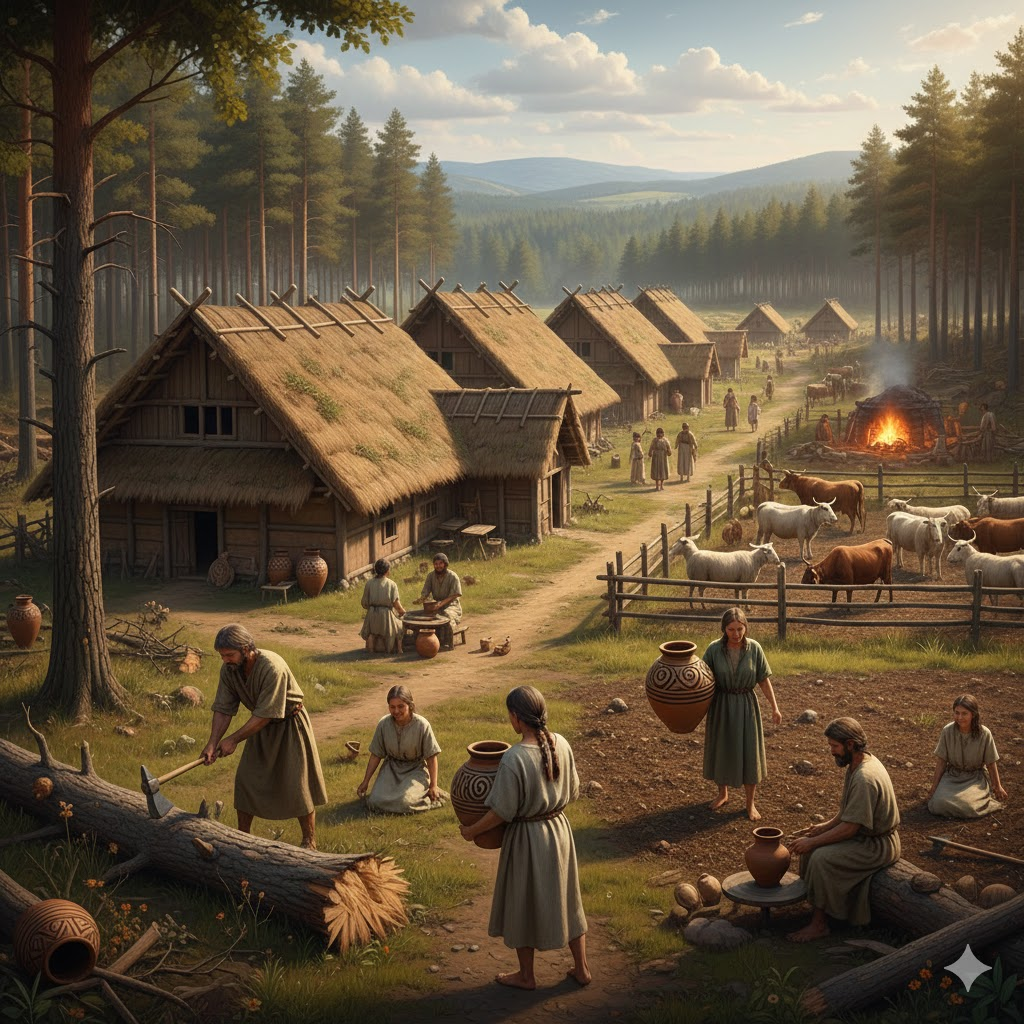
While hunter-gatherers still roamed the forests of Europe, a massive migration began from Anatolia (modern-day Turkey). These people didn't just bring new tools; they brought an entirely new way of life: Agriculture.
- Characteristics: Genetically, they were a distinct group with light skin, dark hair, and dark eyes. They lived in permanent, sedentary villages—a stark contrast to the nomadic hunter-gatherers.
- Archaeological Findings:
- Çatalhöyük (Anatolia): One of the world's first proto-cities, showing how these people lived in mud-brick houses.
- Linear Pottery Culture (LBK): Recognizable by its distinctive pottery with incised lines, found across Central Europe.
- Ötzi the Iceman: Discovered in the Alps, his DNA revealed he was almost purely of Anatolian farmer descent.
- Achievements: They introduced wheat, barley, peas, and domesticated sheep and cattle to Europe. They were also the first to produce large-scale pottery and polished stone axes for clearing forests.

The final "major" wave came from the Pontic-Caspian steppe (modern-day Ukraine and Russia). Known as the Yamnaya (from the Russian yama, meaning "pit"), these nomadic pastoralists swept into Europe with a speed and genetic impact that transformed the continent overnight.
- Characteristics: They were tall, physically robust, and mostly carried the genes for light skin and brown eyes. They were highly mobile, living almost entirely off their herds.
- Archaeological Findings:
- Kurgans (Burial Mounds): Massive earthen mounds built over "pit graves." These kurgans still dot the landscape from Hungary to the Ural Mountains.
- The Corded Ware Culture: A fusion culture in Northern and Central Europe where Yamnaya migrants intermixed with local farmers.
- Achievements:
- The Wheel and Wagon: They were among the first to use heavy, oxen-drawn wagons, allowing them to move entire communities across the grasslands.
- Horse Domestication: Their mastery of horses gave them a massive military and logistical advantage.
- Indo-European Languages: Most linguists believe the Yamnaya brought the Proto-Indo-European language, the ancestor of English, Spanish, Polish, and Greek.
- Lactose Tolerance: They are credited with spreading the genetic mutation that allows adults to digest milk.